Pass the Yams: Black History Through Family Recipes

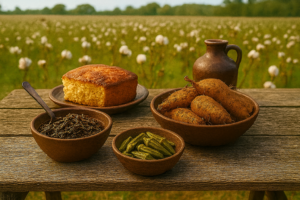
For generations, African American families have treated recipes as more than instructions for cooking—they’re stories, survival manuals, and love letters passed from one generation to the next. During slavery, when reading and writing were often forbidden, recipes were shared by memory and repetition: a pinch in the palm, a splash “’til it looks right,” a slow stew watched carefully instead of timed on a clock. Enslaved cooks blended African foodways with what was available—cornmeal, yams, greens, and okra—turning rations and leftovers into comforting dishes that fed whole communities. Ultimately, in black households, the kitchen became one of the few spaces where skill, creativity, and a quiet kind of authority could exist in an otherwise brutal system.
After emancipation, as Black families tried to build lives in a country still determined to keep them in their place, the kitchen became both sanctuary and strategy room. Sunday dinners, church socials, backyard fish fries—these weren’t just chances to eat well. They were quiet acts of resistance, places where people could exhale, grieve, laugh, argue, and plan the next step. Fried chicken crackling in hot oil, greens simmering low and slow, cornbread pulled from the oven, pound cake cooling on a wire rack, sweet potato pies lined up on the counter—none of it was “soul food” in the cute, trendy sense. These dishes were anchors in a world that kept trying to uproot Black families. And the recipes themselves rarely lived on paper. They lived in the hands and memory of the mothers, grandmothers, and aunties who measured with their eyes and seasoned “’til it tastes right.”
During the civil rights movement, food continued to play a quiet but powerful role. Home kitchens and church basements kept organizers fed while they strategized and traveled. Potluck tables strained under the weight of casseroles, pies, and pans of macaroni and cheese, each dish representing someone’s time, care, and sacrifice.Sharing food was a way of saying, “You’re not alone. We’ve got you.” Even when the larger society treated Black life as disposable, these shared meals insisted on dignity, worth, and community.
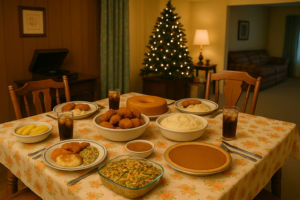
Today, those traditions still shape how African American families celebrate holidays and special occasions. Thanksgiving and Christmas tables lined with dressing, greens, ham, turkey, candied yams, and mac & cheese are really history lessons disguised as comfort food. Family reunions with long buffet tables, back yard cookouts, and Sunday dinners all carry echoes of the slave cabins, family dining rooms, and church basements that sustained Black families through slavery, Jim Crow, and the civil rights era. Some recipes are finally being written down in family cookbooks, group texts, social media posts, and family web-sites; others are still passed on the old-fashioned way: by standing shoulder to shoulder at the stove and watching how they stir.
In many families, the recipe is really a story in disguise—less about exact measurements and more about the hands that stirred the pot. That sweet potato pie will always be “Big Mama’s pie,” even when it’s a granddaughter rolling out the crust, because the recipe carries her voice, her touch, and the era she lived through. Teaching a child to clean greens, season a cast iron skillet, or bake cornbread isn’t just kitchen training—it’s a ceremony. It’s an elder inviting that child into a living tradition of storytelling, where our history has been carried from generation to generation through the food we make and share.
In Black families especially, passing down recipes is a symbolic handoff of our shared history—layered with stories of struggle, resilience, and perseverance. When our voices were silenced in public, the kitchen remained a place where truth could still be spoken, even if the words never left the room. Each carefully prepared dish became a living testament, reminding every new generation that they come from people who survived, resisted, and persevered against the odds. By cooking the same dishes our elders once prepared, we keep their stories moving forward, turning every holiday meal, Sunday dinner, and family gathering into a quiet, powerful act of remembrance that refuses to let our history be forgotten.

Comments